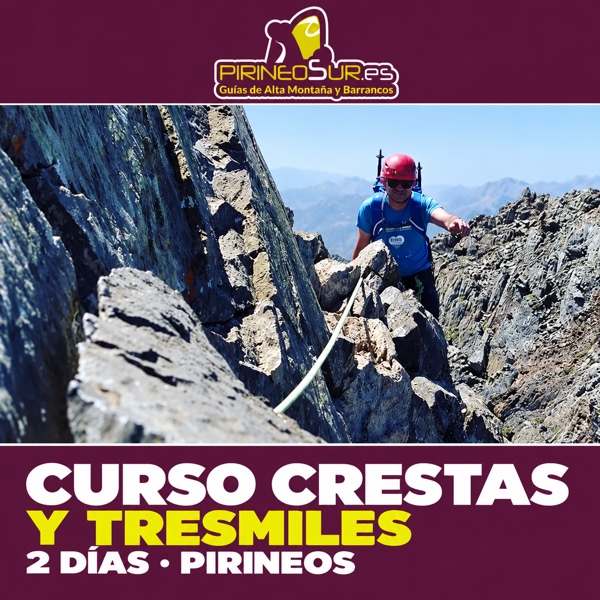
Ridge climbing and scrambling course in the Pyrenees
PirineoSur’s ridge and three-thousand-metre peak climbing course focuses on mountain sections where a scramble or ridge requires rope protection. Over two days, you will work on movement, belaying and understanding the terrain. The indicative programme is adapted to mountain conditions and the participants’ pace of learning.
- Duration: two days.
- Season: May to October.
- Group: 1–3 participants.
- Level: intermediate, with some single-pitch sport climbing experience.
Who the course is for
It is intended for active people with climbing experience who want to understand rope-team progression and protection systems. It may suit you if your mountain outings include scrambling, downclimbing or ridges and you want to work on the relevant rope techniques. Describe both your mountain and climbing experience when enquiring.
What you will work on
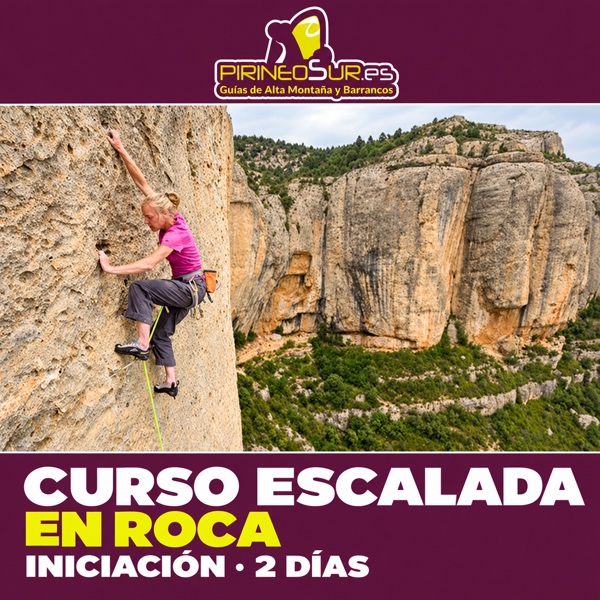
The programme covers rock climbing hazards, traditional grades, fall factor, impact force and dynamic belaying. It also addresses arranging equipment on a harness, balanced movement, traversing, and moving confidently while scrambling and downclimbing.
Other topics include belaying the leader and second, knots and tying-in methods, two- and three-point belay stations, climbing with two ropes and managing them to reduce drag. Abseiling with a backup, removable protection and placing cams, nuts and pitons are part of the syllabus. Route sketches, descriptions, simul-climbing and pitched climbing complete the content.
Equipment and organisation
Two days with a high mountain guide, technical and shared safety equipment, and assistance insurance are included. Accommodation and meals are not included. Ask about logistics and the meeting point.
Bring comfortable sports clothing, your climbing equipment, a 20–30 litre backpack, sun protection, food and 1.5 litres of water. Technical and shared equipment, and a backpack, can be lent if needed.
Connect ridge movement with rope skills
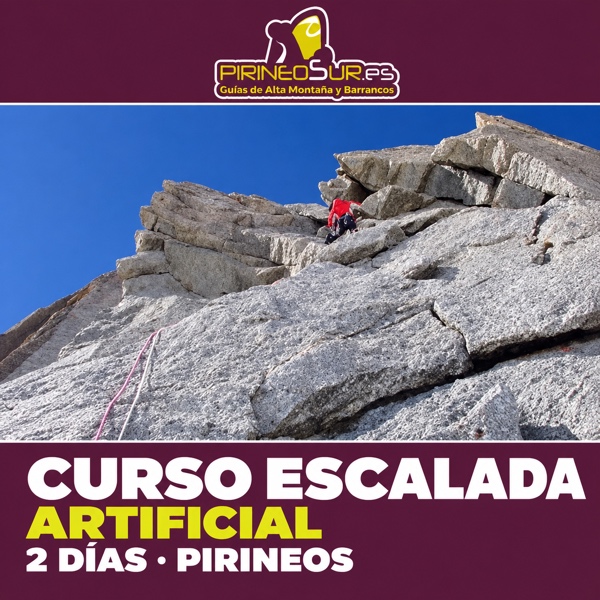
The aim is to learn techniques you can continue practising when mountain outings include scrambling and ridges. As well as movement on rock, you will work on protecting the rope team, handling ropes and understanding route descriptions. Training connects confidence when scrambling up and down with belaying skills. Sharing your experience and goals helps focus practice on the foundations you need for future ridges and ascents.
Questions before booking
Does the course specify a particular summit?
The programme is indicative and adapted to existing conditions. Discuss the planned objectives when arranging your dates.
Is it only about the difficulty of climbing moves?
No. It also covers protecting the rope team, rope handling, and interpreting route sketches and descriptions.
Should I bring my own equipment?
Bring the technical equipment you own and explain what you need; the information includes equipment and backpack loans.
Is hiking experience enough to join?
The course requires some single-pitch sport climbing experience and an active sporting background. Describe both your mountain routes and climbing days so we can assess whether the course matches your preparation.
Which skills cover scrambling up and down?
The programme includes balanced movement, traversing and confidence when scrambling up and down, together with organising equipment. These are connected with belaying and choosing rope techniques for the terrain.
Will we work with two ropes and place protection?
Yes. The syllabus includes two-rope handling to reduce drag, two- and three-point belays and removable protection using cams, nuts and pitons. Backed-up abseiling is also covered.
How long is the course and how large is the group?
It lasts two days, from May to October, for groups of 1–3. The indicative programme is adapted to conditions and learning progress; confirm the area and meeting point for your dates.
How is a ridge route prepared?
Route diagrams, descriptions and traditional grades are part of the course, alongside rock hazards and moving together or in pitches. These subjects help relate the techniques to preparation for future outings.
Ask PirineoSur about dates and availability.
 |